

Pedagogy in the Sheets
To sleep or not to sleep with your teacher? Recent films, TV series, and books say HELL NO.


In 1986, the US Supreme Court decided that consent wasn’t necessarily a bar to sexual harassment (see the case of Meritor Savings Bank v. Vinson, where a black bank employee named Mechelle Vinson succumbed to the sexual advances of her employer out of fear of losing her job). In her brilliant 2021 book The Right To Sex, Amia Srinivasan shows how this ruling has affected universities which in turn had started working on their own policies on consensual relationships (84% of American universities in 2014) and blanket prohibition on relationships between faculty and undergraduate students. Out of the Russell Group universities in the UK, those who ban student-teacher relationships include University College London, Exeter, Nottingham, Oxford, Cambridge, King’s College London, York, Manchester, while Liverpool and Southampton opt for “discouraging” rather than banning intimate relationships. Here are two examples of UCL’s Personal Relationships Policy, considered the first and the strictest:
22. Staff members must not enter into an intimate relationship with a student, in relation to whom they are a Relevant Staff Member.
26. Staff members must not enter into a close friendship with a student, in relation to whom they are a Relevant Staff Member.
When I first learned about these policies and the shift towards policing personal relationships, reducing them to points of contention in long, bureaucratic legalese, I was surprised by how accepting I was of them. Moreso, I was intrigued to dive deeper into the policies and the waves of change that have shaped them. Even though my life as a student had already come to an end after an undergraduate, a masters, and a PhD, the prescriptive nature of those documents made me feel safe. I spent the four years of my undergrad without any of this. Not long after I graduated, I learned from social media that a young woman was officially in a relationship with her MA supervisor, a rather attractive if aging man whose reputation was one for sleeping with students in and out of his faculty. They still look happy and work together. I’m bringing up this example not to throw shade or show disapproval—in fact, this was once what I myself dreamed of in relation to my teacher—but to pose a question: what would have been if there was a relationship ban in place? Srinivasan summarises the paradox at the heart of the matter as follows, poking fun at the superiority we (people and institutions) have endowed male professors with:
To insist that the power differential between professor and student precludes consent is either to see women students, like children, as intrinsically incapable of consent to sex – or to see them as somehow incapacitated by the dazzling force of the professor. And which professor is really that good? [...] Is it too sterile, too boring to suggest that instead of sleeping with his student, this professor should have been – teaching her?
The rhetorical question says it all and for that reason, it’s been ringing in my head since I first read it. In its simplicity (and despite its stylistic nuance), the statement exposes that which fuels student-teacher affairs as something unnecessary. Complicated. Confusing. In other words, a dramaturgical trope.
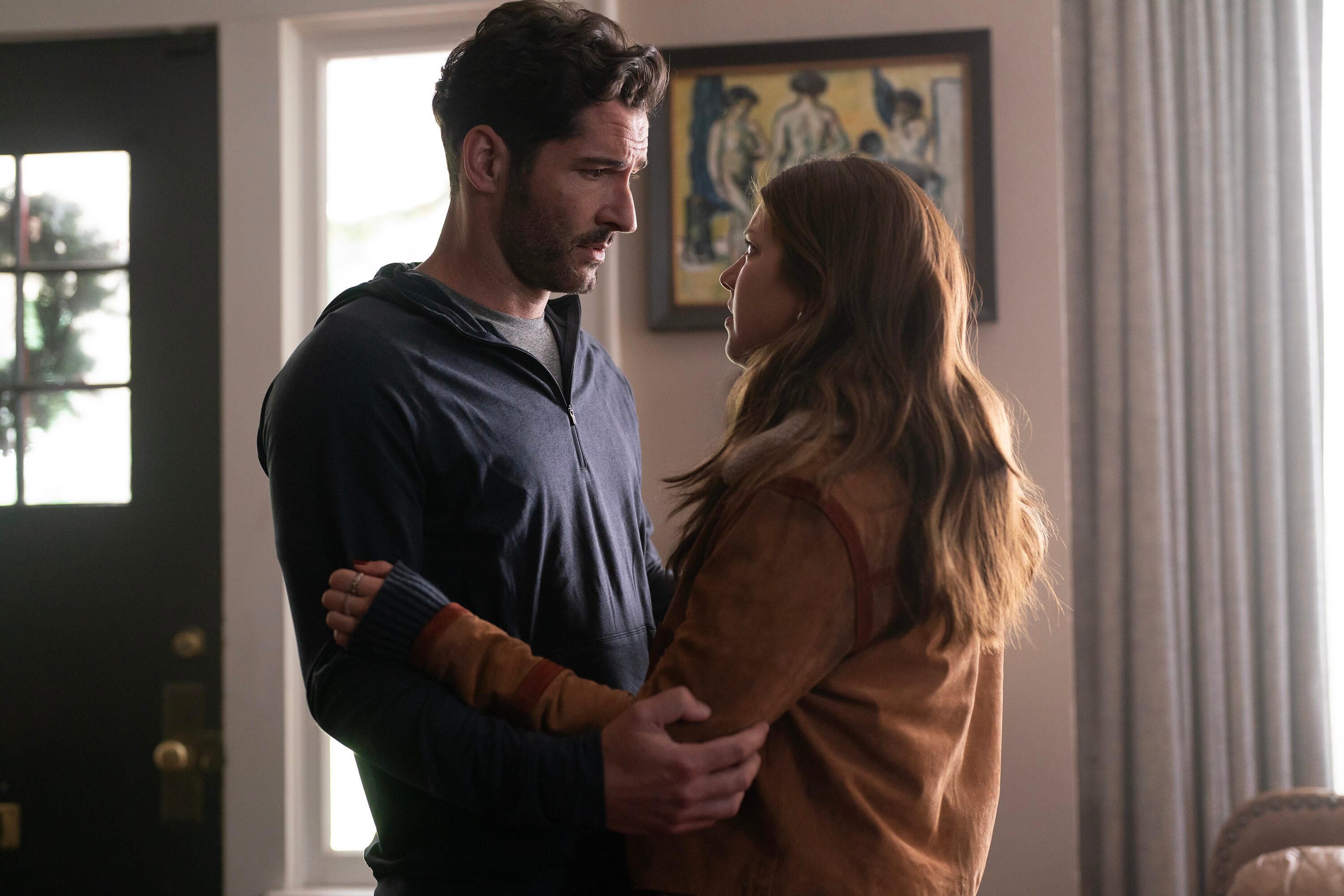
In 1997, academic Jane Gallop wrote a book named Feminist Accused of Sexual Harassment as a response to a long investigation of her relationship(s) with students five years prior. Amia Srinivasan quotes the following passage which ties into her essay’s central premise:
At its most intense – and, I would argue, its most productive – the pedagogical relation between teacher and student is, in fact, ‘a consensual amorous relation.’ And if schools decide to prohibit not only sex but ‘amorous relations’ between teacher and student, the ‘consensual amorous relation’ that will be banned from our campuses might just be teaching itself.
It’s very easy to argue for the erotic nature of pedagogical relations – you just have to turn to the Ancient Greek origin of erōs, and the verb erôtan (to ask, to question) and you’d make Plato proud, see his Cratylus, 398c5-e5. That said, according to a passage in The Republic (403b), Socrates never slept with his students, to the disappointment of many. The reason is that “sexual pleasure mustn’t come into” the relationship between the philosopher and the young boys they are educating, “if they are to love and be loved in the right way.” In her book, Srinivasan tackles the notion of ‘transference’, its origin rooted in psychoanalysis and Freud, as a vital part of analysis. Transference marks the process of displacing the patient’s devotion and affection for the parent onto the analyst, but a crucial point here—and one she points out citing both Freud and his commentators—is that the analyst must not accept it, but still acknowledge it to productively aid the therapeutic work. In other words, don’t let it go to your head.
As teachers, we have many responsibilities: to incite and share knowledge, to support, and to safeguard students are just some of them. It’s probably true for most of us that we decided to step into academia inspired by our own teachers, regardless if they taught middle school or college. The responsibility of being an example (or a mirror) for someone else often eludes us, even if pedagogy demands a healthy or often unhealthy amount of ego, yet it is the ethical stake in teacher-student relationships. You have the responsibility to not sleep with your students because of what Srinivasan calls “a profound epistemic asymmetry” – you just know things they don’t, and that kind of seniority overrides the role of consent. Just because you both want it, doesn’t mean it’s good for them.
When I had feelings for my teacher, I wanted to be the best student he ever had; I was hyper-diligent in my note-taking and over-preparing, attending classes way above my grade just to show (him? myself?) that I could, too, occupy the high echelons of knowledge.
Keep reading with a 7-day free trial
Subscribe to Obscenes to keep reading this post and get 7 days of free access to the full post archives.